
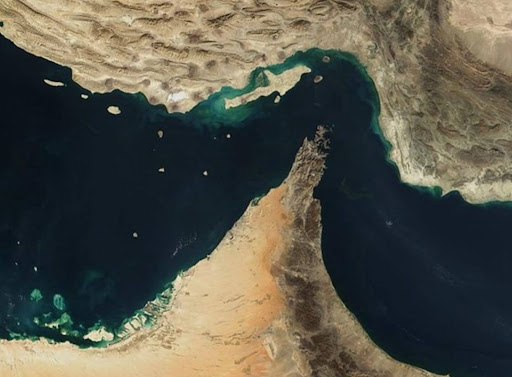
The EU’s Aspides naval mission in the Red Sea has provided only limited protection against Houthi attacks on commercial shipping — a record of mixed effectiveness that Germany’s foreign minister has publicly cited as a reason to doubt the wisdom of expanding the mission to the far more dangerous Strait of Hormuz. Johann Wadephul’s blunt assessment that the Aspides mission is “not effective” has added a significant complication to European deliberations over how to respond to the Hormuz blockade, raising questions not only about the mission’s future but about whether the EU has the right tools and political will for the maritime security challenges it now faces.
Iran’s blockade of the Hormuz strait, triggered by US-Israeli airstrikes in late February, has generated the worst oil supply disruption in history. One-fifth of global oil exports ordinarily flow through the passage. Tehran has attacked sixteen tankers, declared vessels heading for American or allied ports to be legitimate targets, and threatened to mine the waterway. President Trump has called on EU member states among others to send warships to defend the passage, but the EU has struggled to formulate a coherent collective response, partly because of the doubts about Aspides that Wadephul has articulated publicly.
The Aspides mission’s record in the Red Sea offers a cautionary tale. Despite the deployment of ships from France, Italy, and Greece to protect commercial shipping from Houthi attacks, the mission has not fully deterred strikes on vessels in the region. Commercial shipping has diverted away from the Red Sea route in large numbers, accepting the longer and more expensive journey around the Cape of Good Hope rather than relying on Aspides protection. If the mission has not deterred Houthi attacks in the Red Sea, its deterrent value against a far more capable Iranian military force in the tighter confines of the Hormuz strait would be even more limited.
The political obstacles to expanding Aspides are compounded by the military ones. France has ruled out sending warships while the conflict continues, which means the mission’s most significant European naval contributor would be unavailable for any Hormuz deployment. Building EU consensus on a major expansion of a mission that Germany’s foreign minister has described as ineffective would require a significant shift in several member states’ political positions. The EU’s foreign affairs council is examining options, but the gap between examining and deciding has historically been wide in sensitive military matters.
China’s diplomatic approach — engaging Tehran directly rather than positioning naval assets — sidesteps these institutional challenges entirely. Beijing is reportedly in discussions with Iran about allowing tankers to pass safely, a process that leverages China’s unique relationship with Tehran. The Chinese embassy confirmed China’s commitment to constructive regional engagement and de-escalation. US Energy Secretary Chris Wright expressed hope that China would prove a constructive partner. Whether China’s quiet diplomacy can succeed where European naval deliberations have stalled remains the pivotal question of the entire Hormuz crisis.