
The Gulf energy sector had nowhere left to hide on Wednesday after Iran issued a sweeping warning against facilities across Saudi Arabia, the UAE, and Qatar following an Israeli strike on the South Pars gasfield. The Revolutionary Guards named specific targets and ordered immediate evacuation, declaring the sites were “direct and legitimate targets.” Oil prices surged toward $110 a barrel as the Gulf energy sector confronted the reality of having no remaining safe ground.
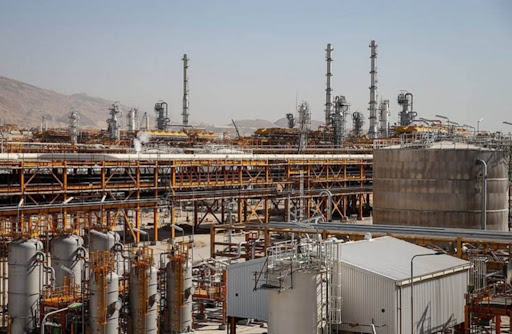
South Pars, the world’s largest natural gas reserve, is shared between Iran and Qatar and fundamental to Iran’s gas economy. The Israeli strike — reportedly with US consent — was unprecedented in its targeting of Iranian fossil fuel production. Both countries had previously maintained energy infrastructure as off-limits, but that protection had now been withdrawn — leaving every part of the Gulf energy sector exposed and nowhere left to hide.
Iran’s state broadcaster named Saudi Arabia’s Samref refinery and Jubail complex, the UAE’s al-Hosn gasfield, and Qatar’s Mesaieed and Ras Laffan facilities as targets. All workers and residents near these sites were told to leave immediately. Asaluyeh governor Eskandar Pasalar condemned the US-Israeli escalation as “political suicide” and declared the war had entered a full-scale economic phase.
Brent crude rose nearly 5% to $108.60 per barrel, while European gas benchmarks jumped more than 7.5% to above €55.50 per megawatt hour. Gulf oil exports had already been cut by 60% from pre-war volumes due to sustained infrastructure attacks and Iran’s Strait of Hormuz blockade. Iran had maintained its own crude exports through the strait while blocking Gulf neighbors’ shipments — an imbalance that had given it a powerful strategic weapon throughout the conflict.
Qatar’s government spokesperson Majid al-Ansari warned that targeting energy infrastructure was a direct threat to global energy security, the environment, and millions of regional residents. The Gulf energy sector’s lack of remaining safe ground was a development that energy planners and risk managers had long considered a worst-case scenario. That scenario had now materialized — and the world was left to face its consequences with the limited tools at its disposal.