
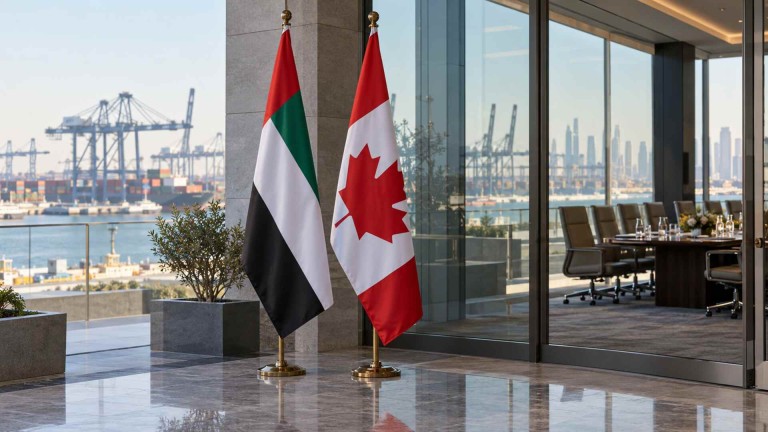
The United Arab Emirates and Canada have taken a significant step towards enhancing their bilateral relations by signing a series of major agreements focused on trade, investment, and defense. This development occurred during the visit of Abu Dhabi Crown Prince Sheikh Khaled bin Mohamed bin Zayed Al Nahyan to Ottawa, marking a pivotal moment in the transformation of their relationship into a more structured strategic partnership.
Central to these agreements is the Comprehensive Economic Partnership Agreement (CEPA), which promises to eliminate or reduce tariffs on over 99 percent of Canada’s current exports to the UAE. This move is expected to double bilateral trade over the next decade, aiding Canada’s efforts to diversify its international economic partnerships and reduce its dependency on the U.S. market.
In addition to the CEPA, the two countries have signed an updated defense cooperation agreement and a memorandum on diplomatic training. They have also agreed to commence negotiations on extradition and mutual legal assistance treaties, further solidifying their strategic ties.
The UAE is already Canada’s largest export market in the Middle East, with more than 150 Canadian companies operating in the region. The UAE has committed to investing up to $50 billion in Canada, focusing on sectors such as energy, artificial intelligence, critical minerals, and infrastructure. This partnership builds on existing Emirati investments in Canadian industries, including chemicals and logistics.
For the UAE, strengthening relations with Canada supports its broader strategy of expanding international trade networks and diversifying supply chains. Canada offers significant resources, agricultural production, advanced engineering capabilities, and access to major international markets, making it an attractive partner.
Both nations have identified several sectors with strong potential for future cooperation, including critical minerals, food security, and artificial intelligence. Combining Canada’s natural resources with Emirati investment in processing and industrial development could enhance both countries’ capabilities. Additionally, Canadian grains, pulses, and seafood could bolster the UAE’s food security, while collaboration in artificial intelligence could leverage Canada’s research expertise and energy resources alongside the UAE’s growing technology sector.
Despite these promising developments, the agreements will require further implementation. Canada’s Parliament must ratify the trade agreement, and investment commitments need to be translated into concrete projects. This strengthened partnership underscores a shared interest in economic diversification, reliable supply chains, and international cooperation amid global trade uncertainties.