
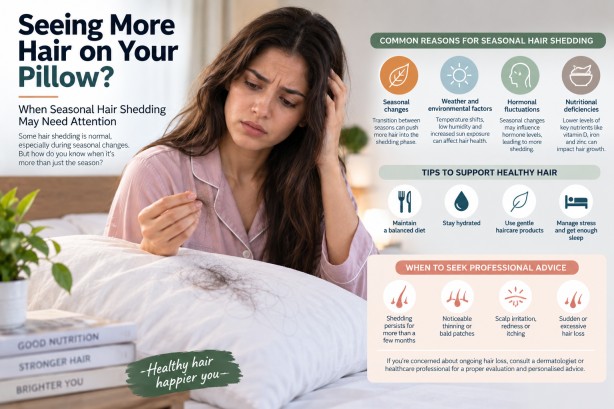
Noticing more hair on your pillow, in your comb, or down the shower drain can be unsettling. While hair shedding often increases with seasonal shifts, not every instance of substantial hair loss should be dismissed as mere weather-related changes. Identifying the pattern, duration, and intensity of hair loss is crucial in determining when it might be time to pay more attention.
Hair undergoes natural phases of growth, rest, and shedding, with certain periods seeing an increase in the number of hairs entering the shedding phase. This can make hair loss more noticeable. Generally, mild seasonal shedding resolves itself without significantly affecting overall hair density. However, persistent or noticeably heavy hair loss may have a different cause beyond seasonal changes and warrants further investigation.
Temporary hair shedding typically remains mild and gradually improves. In contrast, excessive shedding is more apparent, with larger quantities of hair falling out during activities like washing, brushing, or styling. Individuals might observe thinning, particularly around the hairline or parting. A sudden increase in hair loss, especially if it persists for several weeks, should be monitored closely.
Consulting a healthcare professional is advisable if you experience hair shedding that continues for months, visible scalp thinning, a reduction in overall hair density, or hair loss concentrated in specific areas. Additionally, if hair fall begins after illness, prolonged fever, major stress, significant weight loss, or a change in medication, it may be linked to temporary disruptions in the hair-growth cycle or other underlying factors. Persistent hair loss could result from nutritional deficiencies, thyroid issues, hormonal changes, or genetic factors, making professional evaluation important.
Supporting normal hair growth involves maintaining a balanced lifestyle. Ensure your diet is rich in protein and essential nutrients, avoid overly restrictive diets, manage stress effectively, and stick to a consistent sleep routine. Gentle hair care is also key—steer clear of excessive heat styling, tight hairstyles, and harsh chemical treatments, especially when hair is weak or shedding heavily. While a few extra strands on your pillow or in the shower may not signal a major issue, paying attention to the pattern, duration, and visible changes in hair density is important. If shedding is unusually heavy, persists for months, or leads to noticeable thinning, it’s prudent to seek evaluation rather than wait for it to resolve on its own.