
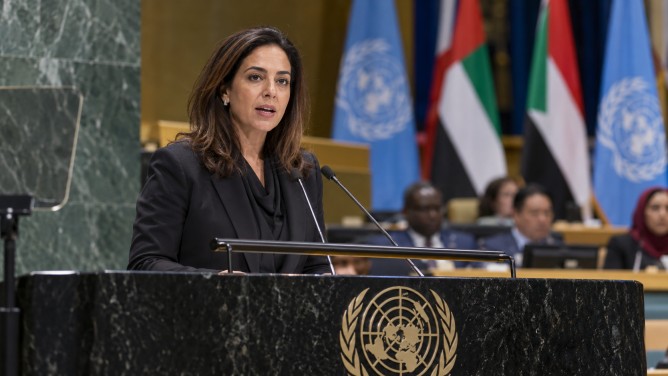
The nomination of Lana Nusseibeh by the United Arab Emirates for the position of United Nations Secretary-General has sparked significant opposition from Sudanese diaspora communities and international human rights organizations. Critics highlight her past defense of the UAE against claims of supporting Sudan’s paramilitary Rapid Support Forces (RSF), raising concerns about her ability to act independently and effectively in the role.
As the UAE puts forward Nusseibeh to succeed António Guterres at the end of his term, the controversy centers around ongoing allegations of the UAE’s involvement in Sudan’s civil conflict. The RSF, which has been accused of committing serious human rights violations during the conflict with Sudan’s army, received attention following their October 2025 attack on El Fasher, characterized by the United Nations as displaying genocide-like traits.
Hala al-Karib, a Sudanese activist for women’s rights and democracy, questioned Nusseibeh’s capacity to operate independently of her government’s stance on Sudan. She expressed concerns that her approval could impede efforts to achieve justice for victims of the conflict. Other Sudanese activists echoed these sentiments, fearing her appointment might erode trust in the United Nations’ ability to remain impartial and hold powerful nations accountable.
Human rights advocates, including former Human Rights Watch executive director Kenneth Roth, criticized Nusseibeh’s previous dismissals of allegations regarding UAE’s support for the RSF. They argue that her track record raises doubts about her commitment to accountability.
Nusseibeh, however, has defended her candidacy by condemning the RSF’s actions in Sudan as atrocious. She assures that, if appointed, she would support UN fact-finding efforts and initiatives aimed at promoting accountability and transitional justice. She has also taken leave from her ministerial duties in the UAE to demonstrate the independence expected of a UN Secretary-General.
The selection process for the UN’s top position requires any candidate to gain at least nine affirmative votes from the 15-member UN Security Council and avoid a veto from any of its five permanent members: the United States, the United Kingdom, China, France, and Russia. The race remains competitive, with former Costa Rican vice-president Rebeca Grynspan previously identified as a leading contender in informal polls.
The debate surrounding Nusseibeh’s nomination underscores broader concerns about the independence of international institutions and their capability to enforce accountability for alleged human rights violations in conflict zones.