
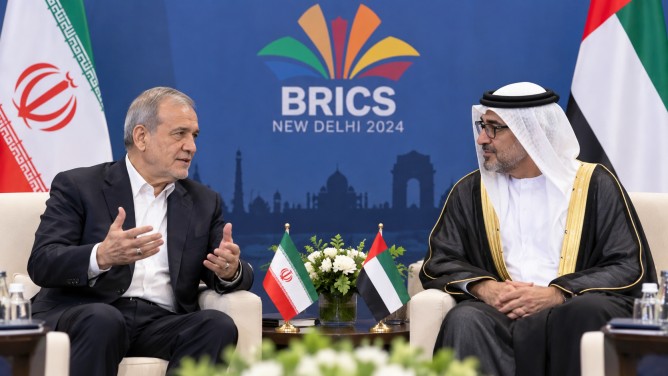
In a bid to mend strained relations, Iranian President Masoud Pezeshkian announced that Iran and the United Arab Emirates (UAE) are working towards fostering a stronger bilateral relationship. This development follows a meeting with Abu Dhabi Crown Prince Khaled bin Mohamed on the sidelines of the BRICS Summit in New Delhi. Describing the encounter as constructive, Pezeshkian emphasized the mutual decision to move beyond prior disagreements and focus on future collaboration. This dialogue occurs amid persistent regional tensions, with countries in the area seeking enhanced security collaboration and more efficient navigation of shipping routes.
Upcoming talks scheduled for September 14 in Oman will see Iranian officials engaging with representatives from Gulf countries and Iraq to address regional security and the strategic Strait of Hormuz. These discussions aim to enhance mutual understanding and bolster collective security among the involved nations. However, Bahrain has opted out of participating in this meeting.
During the summit, President Pezeshkian advocated for stronger economic ties among BRICS nations, emphasizing the potential benefits of expanded use of national currencies in trade and the need for improved financial mechanisms. He highlighted the vulnerabilities emerging economies face due to reliance on existing global financial and trade systems, which can subject them to political and economic pressures.
The Iranian leader urged BRICS members to enhance their economic resilience and cooperation, particularly by opposing unilateral sanctions and defending civilian infrastructure from attacks. Additionally, Pezeshkian underscored Iran’s advantageous strategic location, abundant energy resources, and extensive transit networks as vital contributions to developing trade and energy corridors connecting BRICS economies.
This renewed diplomatic push comes at a time of increased tension around the Strait of Hormuz, underscoring the importance of regional dialogue and cooperation for maintaining security and ensuring the stability of global energy supplies.